

Who we are
AFFA represents technology and project developers advancing forest-to-fuels projects across the United States. Our members are working to create durable markets for forest thinnings, logging slash, mill residuals, restoration material and other underutilized woody resources—while supporting healthier forests, rural economies, American manufacturing and domestic fuel security.
AFFA’s members are working to create new markets for American forest resources, strengthen domestic fuel security, support rural jobs and manufacturing, and help reduce the cost of managing forest at risk of catastrophic wildfire.


Why AFFA Exists
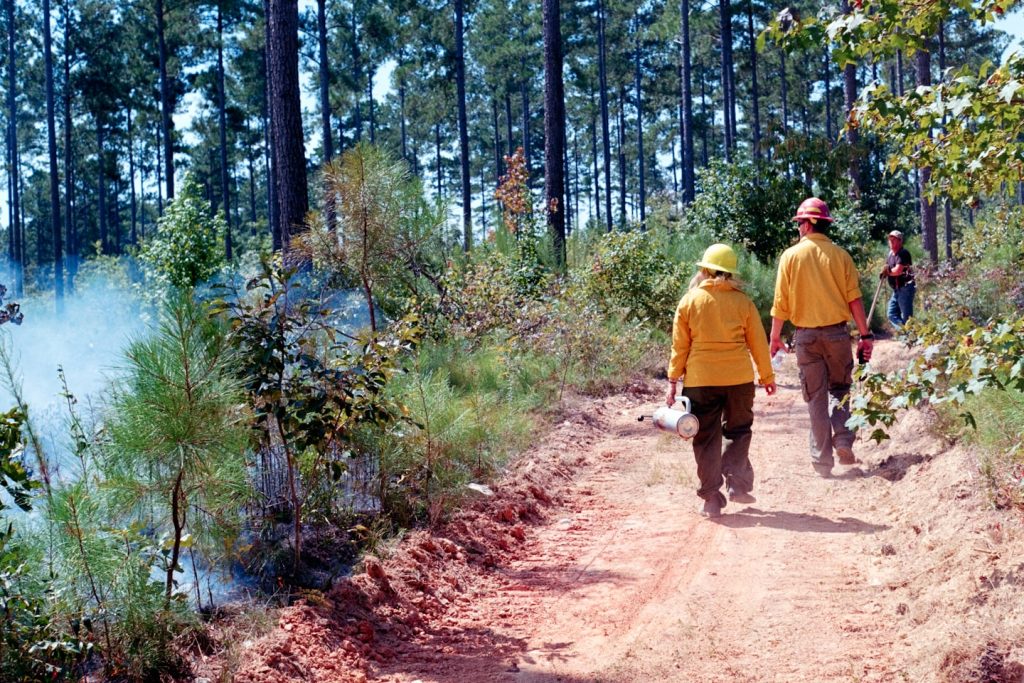
AFFA exists to unite the Forest Fuels industry to advocate for policy changes that address the overabundance of underutilized wood resources while strengthening domestic energy production and creating economic growth in rural areas throughout the US.
AFFA is driving critical policy improvements that will unlock the full value of America’s forest resources—strengthening domestic fuel production, attracting investment, and driving durable economic growth across rural communities throughout America.
For generations, pulp and paper mills and other forest-product facilities provided essential markets for lower-value wood, chips, and residuals. But that market infrastructure has contracted sharply. A 2026 analysis by AFRY for the U.S. Endowment for Forestry and Communities found that since 2015, roughly 42 U.S. pulp mills and 70 pulping lines have closed, reducing pulp capacity by about 25% and removing demand equivalent to tens of millions of green tons of wood annually.
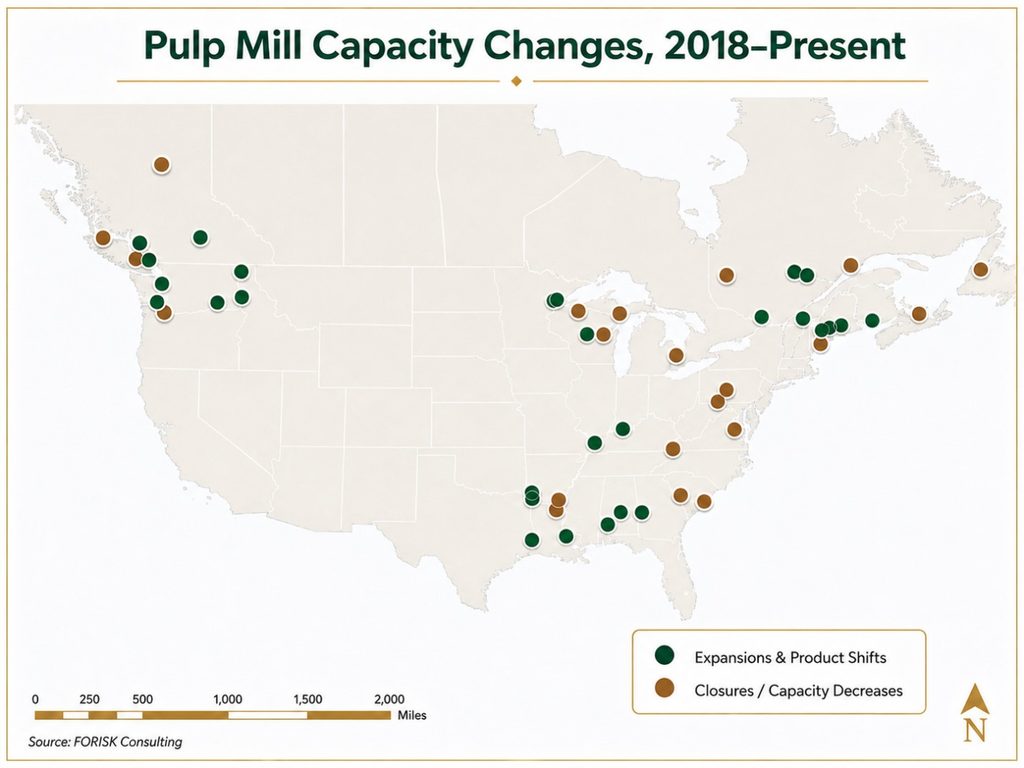
The effects extend well beyond the mill gate. When a major wood-consuming facility closes, landowners, loggers, truckers, equipment suppliers, and rural communities can all lose an important customer. Forest Service research has similarly found that declining pulp-and-paper capacity can reduce logging activity and create wider economic impacts across forest-dependent regions.
New advanced fuel pathways utilize forestry residues, mill waste, thinnings, and other biomass feedstocks to produce domestic fuels. The U.S. Department of Energy specifically identifies forestry residues and wood mill waste as potential feedstocks for sustainable aviation fuel and other liquid biofuels, while federal research has highlighted the opportunity to use thinnings, slash, bark, and wildfire-mitigation material for emerging fuel production.
AFFA exists to help bridge these two realities: declining traditional markets for forest thinnings and wood residuals and the opportunity for technologies to convert forest resources into domestic fuels. By advancing practical policy and regulatory pathways, AFFA works to help turn underutilized wood resources into durable new markets, private investment, and economic opportunity for America’s forest communities.
Our Mission
To advance practical, durable policies that expand markets for sustainably sourced forest resources used in domestic fuel production.
Healthy Forests
Create productive outlets for material generated through forest management and restoration.
Durable Wood Markets
Expand demand for lower-value and underutilized forest resources.
Domestic Fuels
Enable forest-derived resources to compete in established and emerging fuel markets.
Rural Opportunity
Support investment, manufacturing and supply-chain jobs in forested communities.
Founded by Forest-Fuels Industry Practitioners

Dan LeFevers, Executive Director

Megan McCormick, Director
Dan LeFevers brings decades of experience in energy technology, commercialization, public policy, and market development to his role as Executive Director of the American Forest Fuels Alliance. His career has included leadership roles with GTI Energy, where he worked on collaborative energy technology deployment and state and consumer programs, as well as SunGas Renewables, where he serves as Vice President of Business Development supporting biomass-to-fuels commercialization.
Megan McCormick is a woody biomass and biofuels strategist with experience spanning forest-resource markets, woody feedstock sourcing, renewable-fuel project development, sustainability, logistics, and policy. She holds a master’s degree in Forestry Business from the University of Helsinki and advises renewable-fuel and forest-industry clients on feedstock availability, supply-chain strategy, sustainability requirements, and market development through her company, SilvaCurrent.
His experience spans biomass conversion, gasification, renewable fuels, hydrogen, regulatory engagement, and the development of emerging energy markets. At AFFA, Dan leads the Alliance’s policy engagement, industry coordination, and efforts to advance practical market pathways for forest-derived fuels.
Her recent work has focused extensively on woody biomass for sustainable aviation fuel and other low-carbon fuels, including feedstock sourcing and eligibility, logistics, and the regulatory conditions affecting commercialization. At AFFA, Megan helps lead policy strategy, industry engagement, member development, and the Alliance’s work to expand durable markets for underutilized American forest resources.
What Makes AFFA Different?
Developer-Led
AFFA’s policy priorities are informed by companies actually trying to commercialize forest-to-fuels technologies and projects.
Focused on Practical Barriers
AFFA concentrates on the feedstock, regulatory and market-access issues that can determine whether projects become bankable and buildable.
Technology Neutral
AFFA does not advocate for government to select winning companies or conversion pathways. It supports clear rules that allow investment, carbon performance, economics and market demand to determine outcomes.